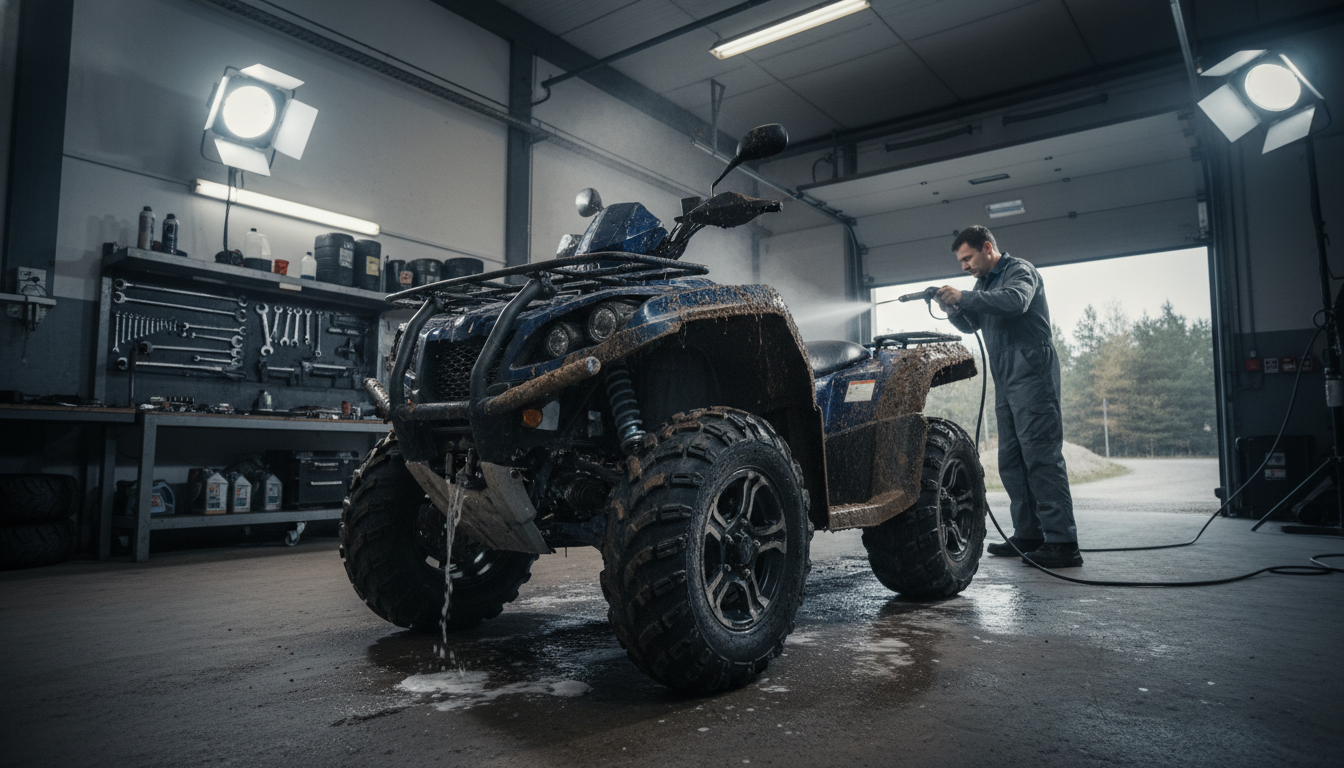
The Powerplant Behind Serious Mud Machines
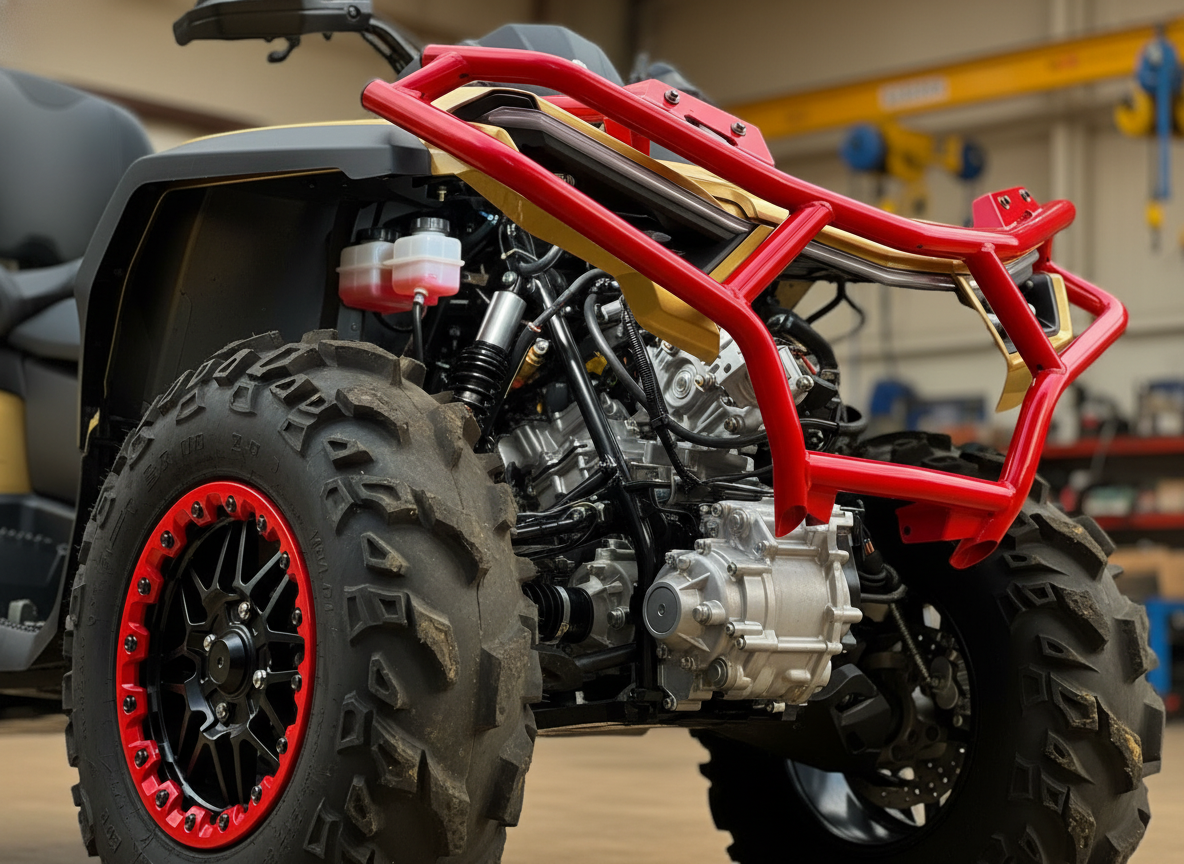
In ATVs from the QJMOTOR "1000" class (like the SFA 1000 / SFA 1000 PRO—often chosen as the base for "mud" configurations), the manufacturer has deployed a powerful, modern V2 engine. This powerplant is engineered to combine substantial power, high torque, and resistance to challenging conditions (water, mud, dust)—not just impressive spec sheet numbers.
Engine Specifications at a Glance
Here's what you need to know about the core unit:
| Specification | Value |
|---|---|
| Configuration | V-Twin (V2), 8-valve, SOHC, liquid-cooled |
| Displacement | 976 cc |
| Bore x Stroke | 91 x 75 mm |
| Maximum Power | 68 kW (92.5 HP) @ 7300 rpm |
| Maximum Torque | 95 Nm @ 5500 rpm |
| Fuel System | Electronic Fuel Injection (Bosch EFI) |
| Transmission | Automatic CVT |
In practice, this specification delivers a distinctly "terrain-focused" character: the ATV has the grunt to push through heavy terrain (95 Nm), while maintaining enough top-end breathing for sustained speed in sand or on longer straights.
Why V2 976cc Makes Sense for Mud ATVs
The V2 (V-Twin) configuration is a popular choice for large ATVs because it naturally suits off-road demands:
Torque and "Pull"
Two large-displacement cylinders build solid mid-range torque more easily (critical in mud, under load, and at low speeds). In this case, the manufacturer specifies 95 Nm at 5500 rpm—substantial pulling power.
Throttle Response
A V2 in an ATV delivers a satisfying, "meaty" response to throttle input (especially compared to smaller singles), making traction control easier in ruts and over roots.
Power Reserve
92.5 HP is enough to not just "get through" but to ride comfortably with a passenger, cargo, and aggressive mud tires without constantly feeling like the machine is at its limit.
Bosch EFI: Real-World Benefits
The consistent mention of Bosch EFI in QJMOTOR specifications isn't just marketing. In a terrain ATV, electronic fuel injection delivers several practical advantages:
- Reliable cold starts (even on cooler days)
- Improved throttle response (crucial for technical riding)
- Stable operation across changing conditions (temperature, humidity, altitude)
EFI isn't a "magic" element that creates power—it's the foundation that makes a large ATV predictable and consistent.
Cooling and "Mud Resistance": The Complete Package
In mud ATVs, the biggest enemy isn't power—it's temperature management and contamination ingestion.
Liquid Cooling System
The SFA 1000 specifications emphasize:
- Liquid cooling with a Panasonic fan and high-capacity pump
- Designed to maintain operating temperature even in +40°C heat
Critical Terrain Detail: High-Mounted Air Intakes
A very important off-road feature: the transmission ventilation inlet and air filter intake are mounted high—near the display housing. This positioning significantly reduces the risk of water, mud, and dust ingestion.
These are exactly the "small" engineering decisions that separate an ATV that looks good from one that actually survives in mud.
CVT and Drivetrain Integration
In the QJMOTOR specification, the engine works with an automatic CVT transmission. Dealer documentation indicates the use of a CVTech transmission (an American manufacturer known for ATV drivetrain solutions).
From a mud rider's perspective, what matters is that the CVT:
- Keeps the engine in its useful RPM range
- Simplifies riding in variable conditions (mud/sand/gravel)
- Works well with the V2's high torque, especially in low range (where applicable)
Service and Quality Control
For a complete picture, it's worth addressing the practical reality: regardless of brand, large ATV longevity depends on maintenance and quality standards.
QJMOTOR/SFA 1000 documentation indicates:
- Service intervals: Every 100 hours or 1600 km (for warranty and mechanical condition)
- ISO 9001 certification (two-tier quality control for parts and assembly)
This isn't an "engine specification," but from a customer perspective, it builds significant credibility for the entire powertrain.
Why This Engine Works for Mud Applications
The Torque Advantage
The 95 Nm torque peak is positioned at 5500 rpm—accessible without screaming the engine. This means consistent pulling power when:
- Climbing out of deep ruts
- Towing equipment or trailers
- Powering through standing water
- Navigating steep, loose terrain
Thermal Management
The liquid cooling system with Panasonic fan isn't just adequate—it's designed for sustained abuse. Mud riding often means:
- Extended low-speed operation (high heat generation)
- Restricted airflow (clogged radiator fins)
- Continuous high-load situations
The cooling package addresses these challenges directly.
Contamination Protection
High-mounted intakes aren't a convenience feature—they're survival equipment. Water ingestion into the CVT or air filter can end a ride instantly. The raised positioning provides meaningful safety margin for water crossings and deep mud.
The Bottom Line
If you had to describe this engine in one sentence: it's a large, modern V2 at 976cc that combines 92.5 HP and 95 Nm, runs on EFI (Bosch), features liquid cooling, and is integrated into a package of terrain-critical solutions (including high-mounted air and CVT ventilation intakes).
The QJMOTOR powerplant isn't just about specifications—it's about engineering decisions that prioritize real-world off-road performance over catalog numbers. For riders who actually use their ATVs in demanding conditions, these details matter far more than peak horsepower claims.