The Reality of Off-Road Stress
Your ATV handles punishment that most people underestimate. Mud acts like grinding paste on bearings and seals. Water finds its way into every crevice. Vibrations work bolts loose faster than you'd expect. That's why proper maintenance isn't optional—it's the cheapest insurance you can buy for drivetrain longevity, brake reliability, and electrical system health.
Below is a practical, field-tested maintenance protocol: what to do after every ride, what to check periodically, and how to avoid causing damage with "good intentions" during cleaning.
Post-Ride Washing: Quick, But Smart
The Biggest Mistake
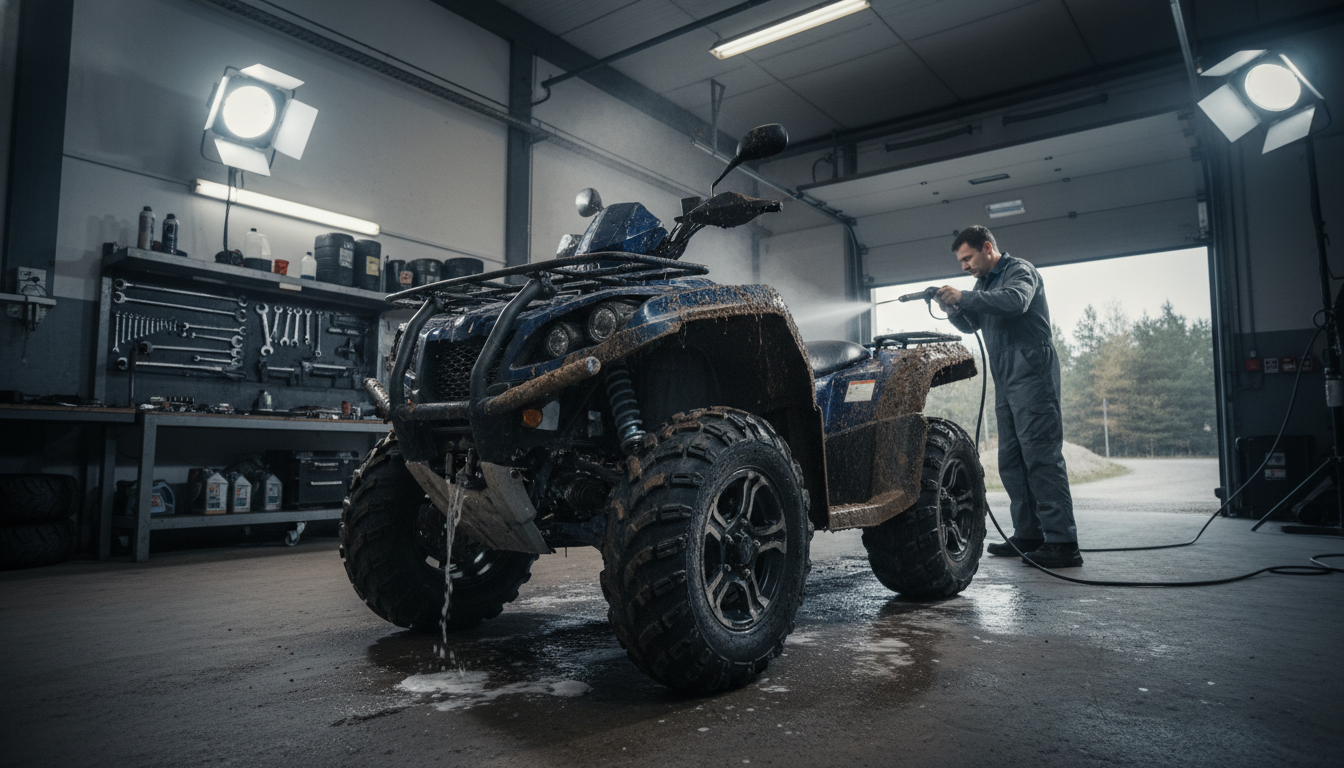
Using a pressure washer at close range near bearings and seals. You can force water into places that should stay dry—leading to corrosion, noise, and premature wear.
How to Wash Properly
Step 1: Initial Rinse
Rinse off mud from the undercarriage, A-arms, wheels, fenders, and guards—ideally before it dries and hardens.
Step 2: Radiator Care
Clean the radiator gently. Don't blast it with a pressure washer lance from close range—bent cooling fins mean reduced heat dissipation.
Step 3: Electronics Protection
Treat electronics and connectors with care. These are critical failure points.
Step 4: Dry-Out Protocol
After washing, ride for 5-10 minutes or leave the machine in a well-ventilated area. Brakes and rotors need to dry completely before storage.
Pro Tip: Most "post-mud" failures start with a clogged radiator causing overheating. This single check prevents the majority of heat-related problems.
Lubrication: The Cheapest Thing That Makes the Biggest Difference
Mud and water flush out grease. Without lubrication, bushings, pins, and joints wear out exponentially faster.
What to Lubricate Regularly
- Grease fittings (where equipped): A-arms, U-joints, suspension linkages
- Moving pivot points: Pins, bushings, lever mechanisms
- Cables and joints: Where the design requires it
After washing, apply light anti-corrosion treatment to exposed metal surfaces—but never on brake rotors or pads.
Oil and Filters: The Foundation, Especially Off-Road
In hard use conditions, "book" service intervals are often too optimistic. Terrain riding means dust, water exposure, high loads, and elevated operating temperatures.
Best Practices
- Change engine oil more frequently when riding in mud, sand, on short trips, or in hot weather
- Always replace the oil filter with every oil change
- Check the air filter after every muddy ride—a clogged filter means power loss and overheating; a filter that leaks dust creates engine seizure risk
If you ride frequently in dust or mud, the air filter becomes your number one checkpoint.
CVT and Belt: The Heart of Automatic Transmission (Critical for 4x4)
In ATVs with CVT transmissions, the belt and CVT housing take serious abuse. Water and mud inside the housing means slippage, overheating, and accelerated belt wear.
What to Do
- Verify the CVT housing remains sealed
- After water crossings, check for moisture inside the housing
- Watch for belt wear symptoms: jerky engagement, squealing, delayed takeoff
Cooling System: The Most Common Cause of "Sudden Shutdown"
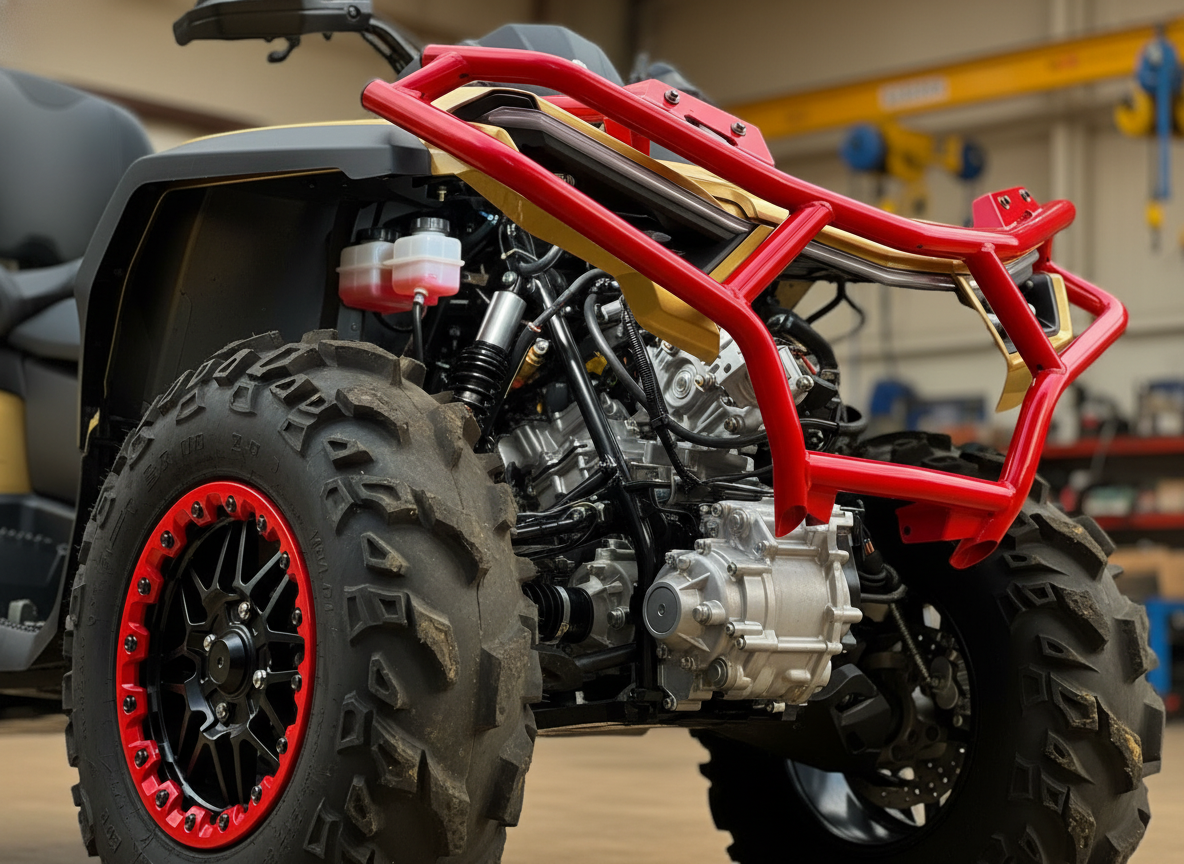
In mud, your radiator can end up looking like it's coated in plasticine. When the engine can't shed heat, problems cascade quickly.
Check Regularly
- Radiator flow: Clean gently as needed
- Coolant level: Top up as required
- Fan operation: Verify it engages properly
- Hoses and clamps: Inspect for deterioration
Differentials and CV Joints: Problems That Only Show Up When It's Too Late
If your ATV has 4WD, you're also dealing with differential oils, transfer case fluids, and CV joints.
What to Inspect
- Differential oil color: "Coffee with milk" appearance often indicates water contamination
- CV boot condition: A torn boot quickly destroys the joint underneath
- Breather vents: Especially critical after water crossings
Brakes: Safety Beyond "Does It Stop?"
After water exposure, brakes often feel weak temporarily. That's normal—as long as they dry out quickly. What's not normal: worn pads or warped rotors.
Inspection Points
- Pad thickness
- Rotor condition
- Brake fluid level and condition (worth replacing on a regular schedule)
After washing, always perform several low-speed braking cycles to restore full stopping power.
Wheels and Tires: Traction and Suspension Protection
Seemingly minor, but makes an enormous difference.
- Check pressure regularly: Too high = reduced traction; too low = damage risk
- Inspect sidewalls after rocky or root-heavy terrain
- Torque wheel bolts properly: Use a torque wrench, not guesswork
Electrical System: Water Is the Enemy Off-Road
Connectors and grounds love to corrode. Then the "ghosts" appear: intermittent operation, random failures.
In Practice
- After washing, check that no water is pooling near connectors
- Periodically apply electrical contact protector to connections (in moderation)
- During winter storage, keep the battery on a maintenance charger
Fasteners and Clearances: Vibration Does Its Work
An ATV in terrain operates under constant vibration. Checking fasteners isn't paranoia—it's essential.
Check Every Few Rides
- Guard, rack, and winch mounting hardware
- A-arm and shock absorber bolts
- Wheel bearings and tie rod ends for play
Simple Trick: Mark critical bolts with paint marker. You'll immediately see if anything has rotated loose.
Practical Maintenance Schedule
After Every Mud/Water Ride
- Rinse and wash + radiator cleaning
- Air filter inspection
- Quick check of CV boots, brakes, and any leaks
Every 10-20 Hours
- Lubrication (where applicable)
- Fastener and clearance checks, tire condition
- CVT belt inspection (if equipped)
Every 20-40 Hours (Depending on Riding Style)
- Oil + filter change
- General drivetrain and cooling system inspection
After Deep Water Crossings
- Check differential/transfer case oil for water contamination
End of Season
- Thorough wash and corrosion treatment
- Fuel and battery preparation for storage
- Inspection of rubber components, hoses, and bearings
The Bottom Line
Maintaining your ATV comes down to three things: cleanliness, lubrication, and periodic inspections. The most expensive failures rarely come from "factory defects"—they come from clogged radiators, water in transmissions, torn CV boots, neglected air filters, and loose bolts.
These aren't theoretical problems. They're the real-world issues that strand riders and create repair bills. A simple post-ride routine prevents the vast majority of them.
Your machine is built to handle serious terrain. Give it the maintenance it deserves, and it'll deliver years of reliable service.